
Gastric Sleeve vs Mini Gastric Bypass in Brisbane: Which Option Is Right for You?
For individuals in Brisbane seeking long-term solutions for significant weight and metabolic health challenges, bariatric surgery can be a life-changing step. Among the most commonly performed procedures are the gastric sleeve and one anastomosis gastric bypass (OAGB) also known as the “mini gastric bypass”. While both surgeries are highly effective for weight loss and improving health outcomes, they differ in how they work, their recovery processes, and the type of results they deliver.
This article will help you compare the gastric sleeve and mini gastric bypass so you can make a more informed decision about your next step. Whether you’re at the start of your research or actively comparing options, this guide will break down the key differences and considerations to help you move forward with confidence.
Dr Aaron Lim, a General and Bariatric Surgeon in Brisbane, offers both gastric sleeve and mini gastric bypass as part of his comprehensive weight-loss surgery services, supported by a multidisciplinary team focused on long-term patient success. You can learn more about his qualifications and approach on the Dr Aaron Lim website.
Understanding Gastric Sleeve Surgery
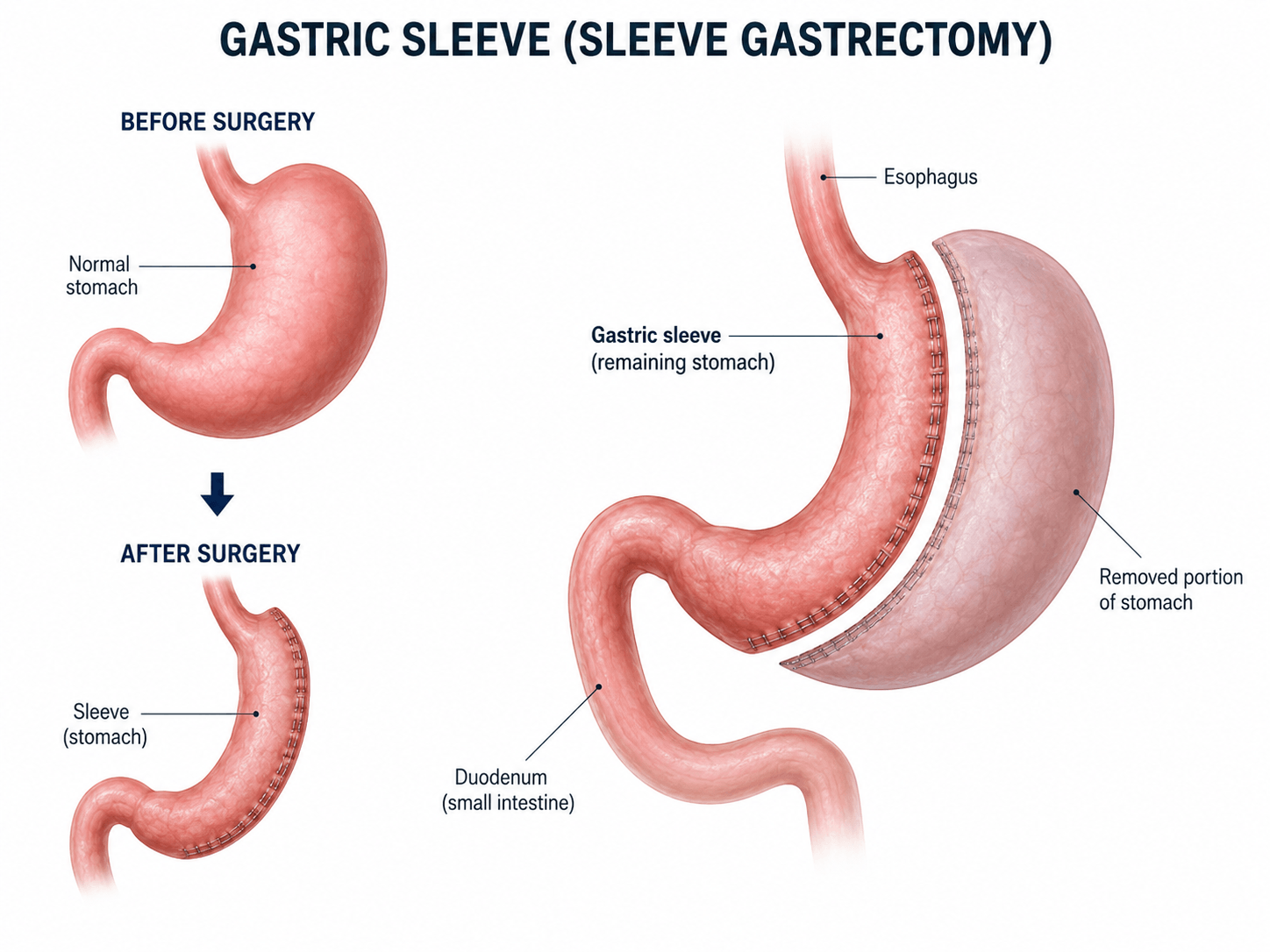
Gastric sleeve surgery, also known as sleeve gastrectomy, involves surgically removing approximately 75 to 80 per cent of the stomach. What remains is a narrow, sleeve-shaped pouch that holds less food and reduces ghrelin production.
This procedure is purely restrictive, meaning it limits how much food you can eat. There is no rerouting of the intestines or significant impact on nutrient absorption.
Gastric sleeve is performed using minimally invasive laparoscopic techniques eg keyhole. Most patients undergoing a gastric sleeve in Brisbane can expect a short hospital stay (usually 1 night) before returning home.
You can explore this procedure further on Dr Aaron Lim's website under Weight Loss Surgery.
What Is Mini Gastric Bypass Surgery?
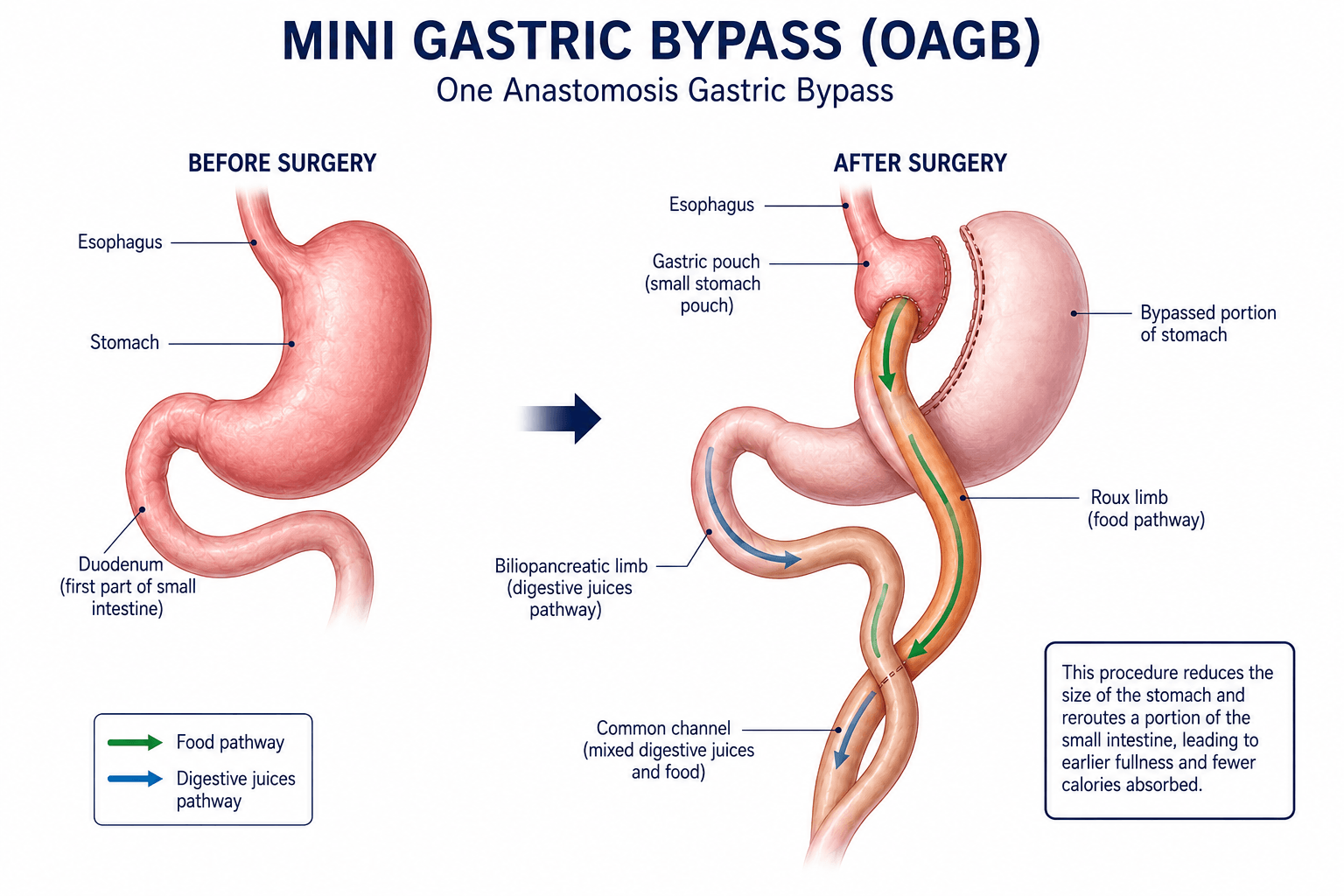
The one anastomosis gastric bypass (OAGB), also know as the “mini gastric bypass” is both a restrictive and malabsorptive procedure. It involves dividing the stomach to create a small pouch. This pouch is then connected to a lower part of the small intestine, bypassing a portion of the digestive tract.
This dual approach helps limit the amount of food you eat while also reducing the number of calories and nutrients your body absorbs. As a result, mini gastric bypass can be a stronger metabolic procedure especially with patients that have a BMI of more than 45 or have type 2 diabetes. .
Dr Aaron Lim offers mini gastric bypass for patients seeking a stronger metabolic effect, particularly those with higher BMI levels or conditions such as Type 2 diabetes or metabolic syndrome.
How the Procedures Differ in Mechanism and Impact
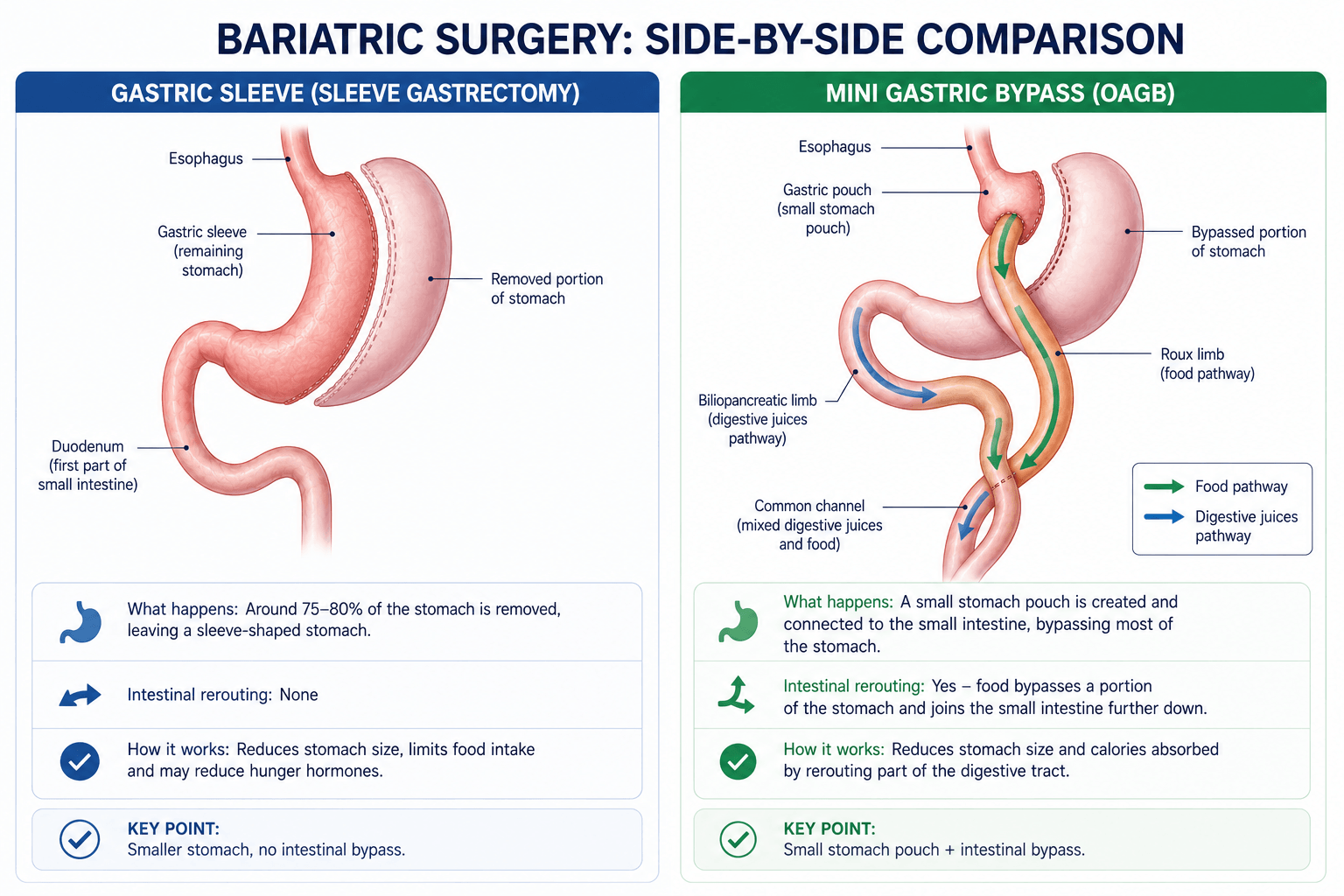
Both surgeries reduce the size of the stomach, but mini gastric bypass includes an additional intestinal bypass component. By bypassing part of the small intestine, digestion and absorption are altered. This can potentially result in more weight loss and a stronger metabolic effect but potentially more side effects.
In contrast, the gastric sleeve does not interfere with nutrient absorption. It works entirely by reducing stomach volume and appetite hormone production. Because it involves fewer surgical steps, it may carry a slightly different risk profile.
Choosing between the two depends on your weight-loss goals, medical history, and lifestyle preferences. A personalised consultation with Dr Aaron Lim can help clarify which option aligns best with your health profile.
Expected Weight Loss Results
Weight-loss outcomes vary among individuals, but both procedures are effective when combined with structured lifestyle changes.
Patients who undergo gastric sleeve surgery typically lose between 50 and 70 per cent of their excess weight within 12 to 18 months. This gradual, steady loss may suit patients seeking a balanced approach.
Those who opt for mini gastric bypass often achieve 60 to 80 per cent excess weight loss within a similar timeframe. Some patients experience faster early results due to the combined restrictive and malabsorptive mechanism.
You can read more about surgical options on the Weight Loss Surgery section of Dr Aaron Lim’s website.
Recovery and Lifestyle Adjustments
Recovery and monitoring requirements are consistent across our procedures, including the Gastric Sleeve, OAGB and RYGB. While patients are generally self-caring immediately after hospital discharge, all patients are expected to follow a 5kg lifting restriction for at least 4 weeks. To ensure long-term health, patients must also commit to lifelong vitamin supplementation and regular blood test monitoring.
Both surgeries still require long-term lifestyle adjustments, including portion control, balanced nutrition and regular physical activity. Structured follow-up is essential to support safe recovery and sustained weight management.

Who Is a Suitable Candidate for Each Procedure?
Determining the most appropriate surgery involves reviewing BMI, medical history, prior weight-loss efforts, and metabolic health.
Current international guidance from the International Federation for the Surgery of Obesity and Metabolic Disorders (IFSO) supports surgery for:
Individuals with a BMI greater than 35, regardless of co-morbidities
Individuals with a BMI greater than 30 who have weight-related comorbidities such as Type 2 diabetes, hypertension, obstructive sleep apnoea or fatty liver disease
BMI thresholds may be lower for certain ethnic groups because of higher metabolic risk at lower BMI levels.
The gastric sleeve may suit patients who prefer a restrictive procedure rather than an intestinal bypass.
Mini gastric bypass may be more appropriate for patients with higher BMI levels or significant metabolic disease.
Understanding Risks and Benefits
All surgical procedures carry potential risks. When performed by an appropriately trained and experienced surgeon, both the gastric sleeve and mini gastric bypass are considered safe and effective options for weight loss.
Benefits of the gastric sleeve include a simpler surgical structure and no intestinal rerouting. Potential considerations include reflux symptoms and the fact that it is not reversible.
Mini gastric bypass offers stronger metabolic effects and often greater weight loss. However, it requires lifelong nutritional monitoring and supplementation.
These risks and benefits are discussed in detail during consultation to ensure informed decision-making.
How Dr Aaron Lim Helps You Choose the Right Surgery
Choosing between a gastric sleeve and a mini gastric bypass should involve careful medical evaluation and discussion.
Dr Aaron Lim takes a holistic, patient-centred approach, assessing your medical history, lifestyle factors and long-term health goals before recommending a procedure.
Support includes:
Our multidisciplinary approach provides you with your own dedicated nurse from your initial appointment throughout your 12-month Care Plan following surgery. Additionally, psychology care is a core part of the patient pathway, ensuring a whole-patient, centred approach to your weight loss journey.
Education and preparation before surgery
Ongoing follow-up and nutritional monitoring
If you are comparing options, you can arrange an assessment through the Dr Aaron Lim contact page.
Ready to Take the Next Step?
If you are actively comparing gastric sleeve and mini gastric bypass in Brisbane, a personalised consultation can help clarify your options.
To discuss your eligibility and surgical options, request an appointment via the Dr Aaron Lim website.
Frequently Asked Questions
-
A gastric sleeve reduces stomach capacity and reduces hunger. Mini gastric bypass creates a small stomach pouch and reroutes part of the intestine to limit absorption.
-
Mini gastric bypass generally leads to slightly higher, and sometimes faster, weight loss, particularly in patients with higher BMI.
-
Recovery expectations are similar for both procedures. Patients are typically self-caring after discharge but should avoid lifting more than 5kg for at least 4 weeks.
-
Your BMI, medical history, and metabolic health help determine the most appropriate option. A detailed consultation with Dr Aaron Lim is essential.
-
Dr Aaron Lim provides gastric sleeve and mini gastric bypass procedures in Brisbane, with structured pre-operative assessment and long-term follow-up care.